
Public Speaking
Why Do I Speak So Fast During Presentations? 4 Common Reasons
If you rush through a pitch or presentation, you may know your material well but still struggle to finish within the time limit without losing your audience along the way. Speaking too fast can make technical explanations harder to follow, hide important points, and leave little room for pauses.
The reason isn't always nervousness. You might be trying to fit in too much content, feel that pauses make you sound less confident, or simply have no idea how long your presentation takes when delivered aloud.
Here are 4 common reasons you may be rushing through a presentation, and what you can do about each one.
The reason isn't always nervousness. You might be trying to fit in too much content, feel that pauses make you sound less confident, or simply have no idea how long your presentation takes when delivered aloud.
Here are 4 common reasons you may be rushing through a presentation, and what you can do about each one.
1. You're nervous about presenting
Public-speaking anxiety can affect how people deliver a speech. In a study of 95 university students, higher self-reported speaking anxiety was associated with shorter speeches and lower self-ratings of performance, although the study did not establish that anxiety directly causes faster speech.
This may feel familiar if you're comfortable discussing technical work with your team but start rushing when pitching to investors, presenting to executives, or speaking at a conference.
This may feel familiar if you're comfortable discussing technical work with your team but start rushing when pitching to investors, presenting to executives, or speaking at a conference.
What to do: Rehearse your presentation aloud several times, ideally in conditions similar to the real event. Pay attention to the sections where you begin to speed up, and mark places where you want to pause. The goal isn't to eliminate all nervousness, but to become more comfortable delivering your message at a controlled pace.
2. You think speaking slowly makes you boring
When you're explaining a product or a technical idea, it can feel as though you need to keep talking to hold the audience's attention. Pauses may seem awkward, or you may worry that a slower delivery makes you sound uncertain.
But speaking slowly doesn't mean speaking monotonously. Effective presenters vary their pace, slowing down for important ideas and allowing the audience time to absorb key points.
But speaking slowly doesn't mean speaking monotonously. Effective presenters vary their pace, slowing down for important ideas and allowing the audience time to absorb key points.
What to do: Mark two or three important moments in your pitch where you want to slow down or pause briefly after making a point. Practice those moments deliberately instead of trying to speak more slowly throughout the entire presentation.
3. You have too much content for the time limit
Founders and technical leaders often have more material than their audience needs: background, implementation details, alternatives considered, results, and future plans. When a 10-minute presentation contains 15 minutes of material, speaking faster won't solve the underlying problem.
What to do: Identify the main message your audience needs to understand, then remove details that don't directly support it. If your pitch consistently runs over time, edit the content before trying to change your speaking pace.
4. You haven't timed a full rehearsal
Reading a script silently doesn't tell you how long your presentation will take. Speaking aloud requires time for technical terms, transitions, slide changes, and pauses, so your actual delivery may be longer than you expect.
What to do: Rehearse the entire pitch aloud and time it, including transitions and pauses. If possible, record yourself so you can check both the total duration and the sections where you rush. This gives you something measurable to improve rather than relying on how long the script feels.
How LokiTalki helps you stop rushing through a presentation
Knowing why you speak too fast is useful, but changing the habit takes practice with the presentation you actually need to deliver. General advice is easy to understand; applying it while explaining your product, presenting technical details, or pitching your startup is harder.
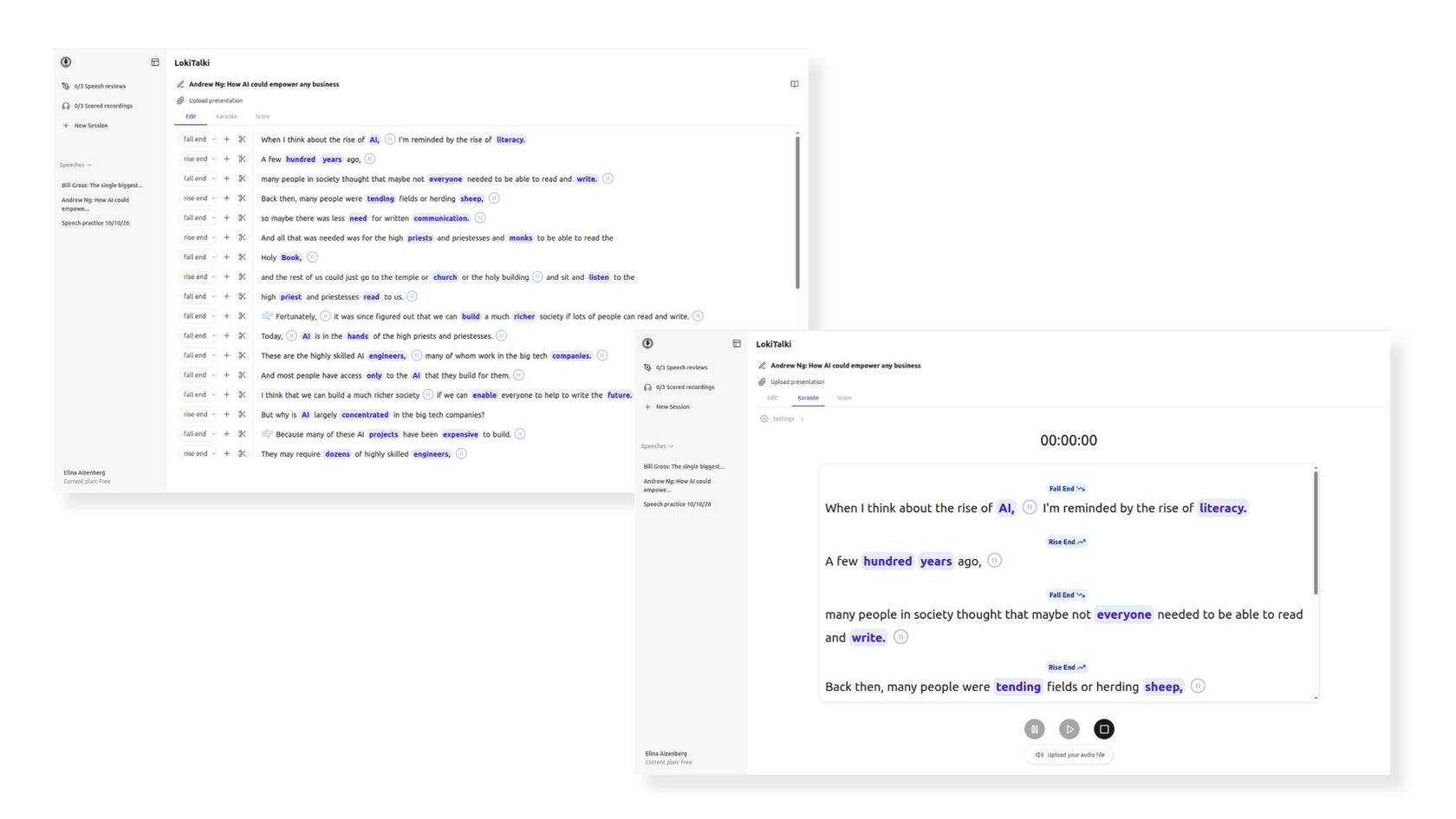
LokiTalki lets you work through your script, add cues for pauses and breathing, rehearse with a teleprompter, and record practice sessions for review. You can identify where you tend to rush, practice those sections, and repeat the presentation until the timing and delivery feel more controlled.
This is especially useful when you have a fixed time limit: you can check whether the problem is your speaking pace, the amount of content, or both, before the real presentation.
How can I stop rushing through a pitch or presentation?
Start by timing a full rehearsal aloud.
If you run over time, cut unnecessary content.
If you finish on time but still sound rushed, mark key moments where you can slow down or pause, then rehearse those sections again.
You need a pace that gives your audience enough time to follow your message, especially when the details matter.
If you run over time, cut unnecessary content.
If you finish on time but still sound rushed, mark key moments where you can slow down or pause, then rehearse those sections again.
You need a pace that gives your audience enough time to follow your message, especially when the details matter.
13.10.2026
See also